
The Broadleaf Approach
What we are
When families find themselves outside of school, they shouldn’t fall through the gaps.
Broadleaf is a relational family hub for children and young people not in school, and their families.
We exist to rebuild what is often lost when school is no longer accessible -
connection, support, access to services, and a sense of belonging.
We are not an alternative to school; we are a bridge between families, community and wider systems.

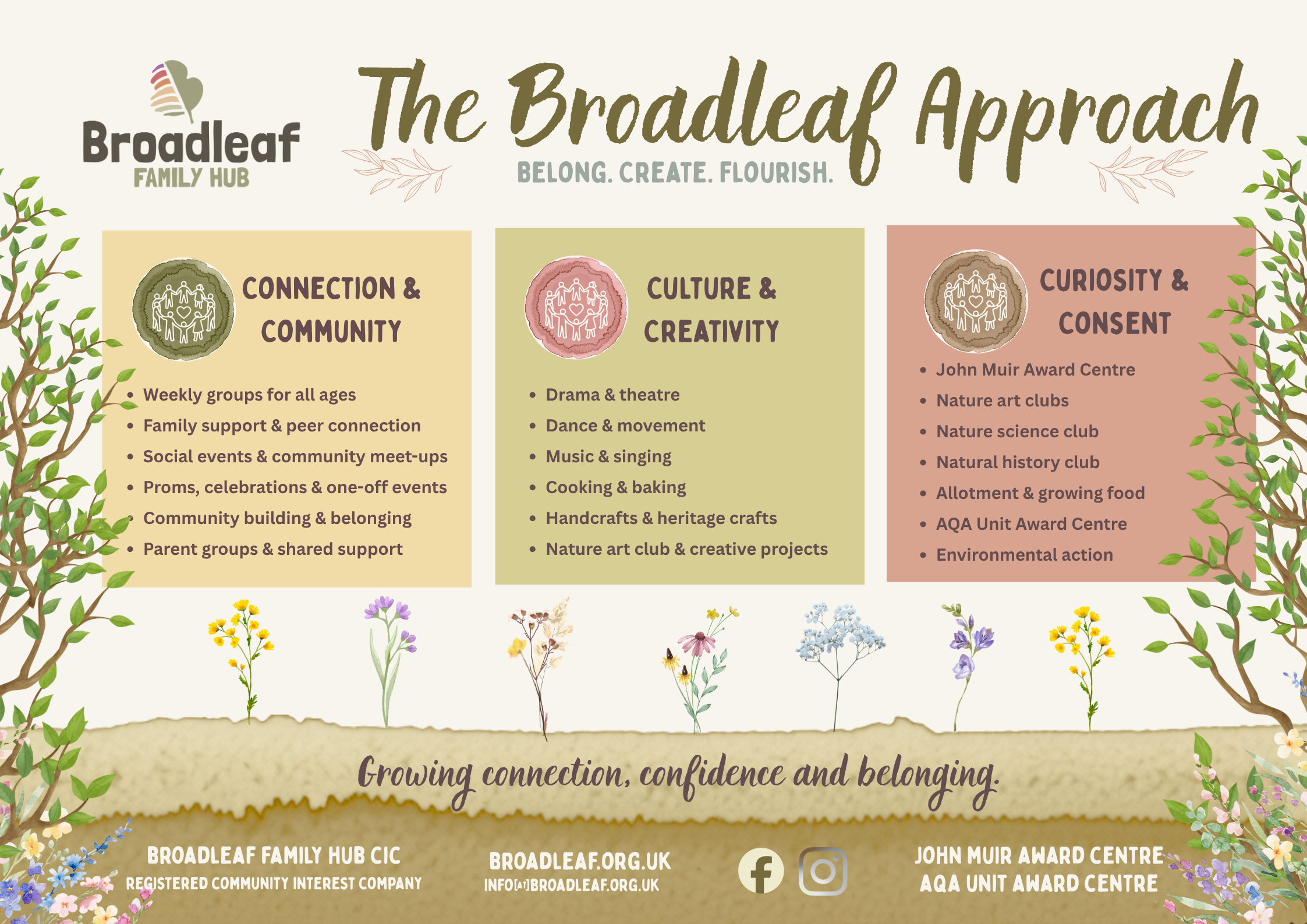
Broadleaf holds relationship-first, consent-based spaces that reconnect families to community, support and opportunity, ensuring no one is left without a place to belong.

Why we are needed
When children don’t attend school, families often experience:
Loss of peer community and daily structure
Reduced or fragmented access to health and support services
Limited access to enrichment, creativity and nature-based opportunities
A lack of clear pathways, trusted information and advocacy
Increased isolation at a point of crisis
Many of the families we support are neurodivergent, disabled, or experiencing mental health challenges. They often fall between mainstream and specialist provision, with neither system able to fully meet their needs.
Broadleaf exists to ensure these families are not left without support.

What we do
We create safe spaces where families can:
Build trusted relationships over time
Access creative, social and nature-based opportunities
Reconnect with community and a sense of belonging
Alongside this, we act as a central access point, connecting families to:
Specialist knowledge and guidance
Health and wellbeing support (including partnerships with statutory services)
Research and collaboration opportunities
Information, signposting and advocacy
How we work
Everything we do is grounded in four core principles:
Consent-based practice - Participation is always invited, never forced. Young people and families have agency, voice and choice in how they engage.
Neurodivergent-led and inclusive - Our approach is shaped by lived experience and deep understanding of neurodivergence. We design environments that reduce barriers, not create them.
Trauma-informed - We recognise that many families arrive in a state of stress or crisis. We prioritise emotional safety, predictability, and attuned relationships.
Relationship-first - everything we do prioritises the relationship with the young person, not arbitrary outcomes.
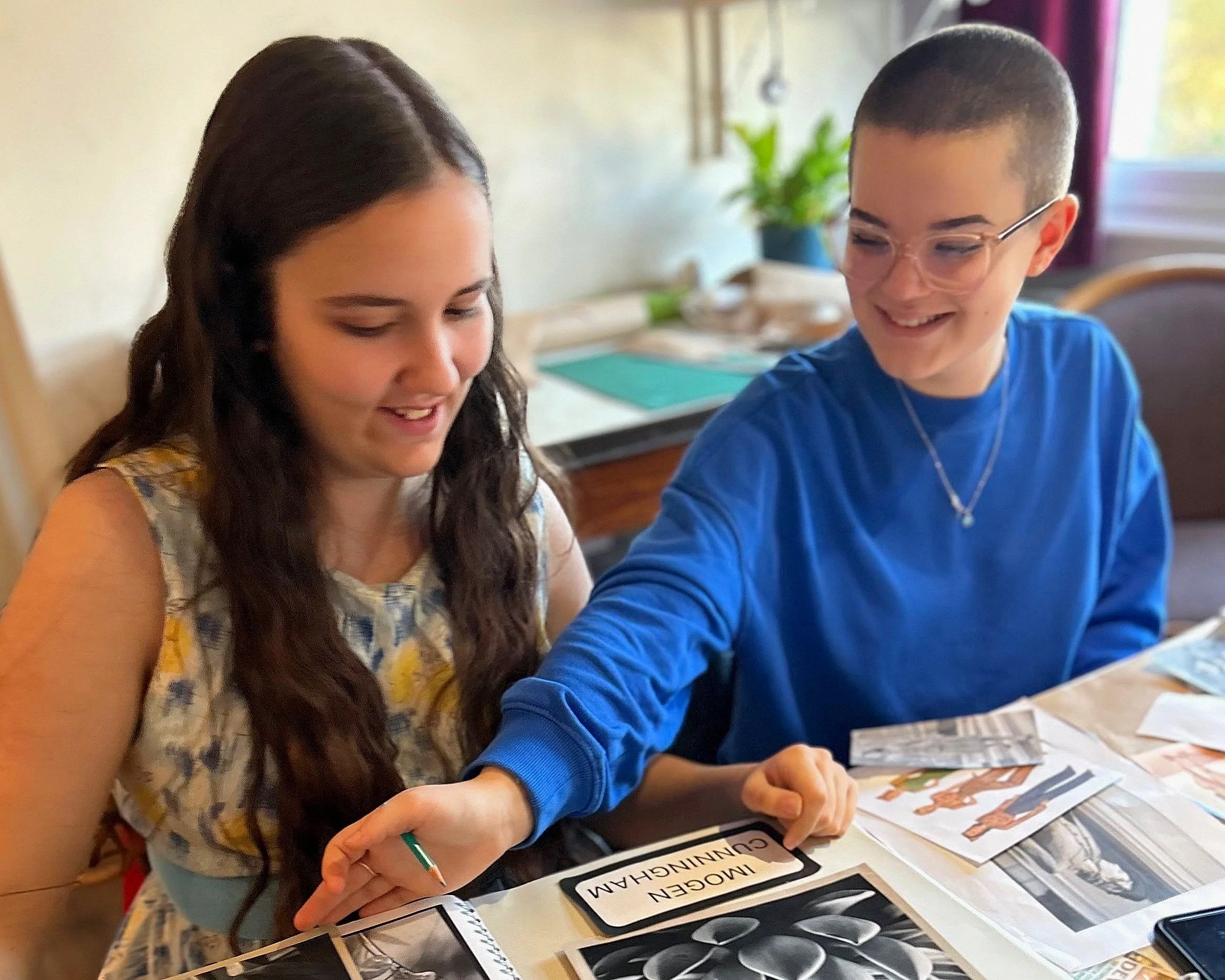
What this means in practice
On the ground, this looks like:
Families staying on site, building safety alongside their young person
Small, consistent groups that develop trust over time
Skilled facilitators who prioritise relationships over outcomes
Flexible engagement - young people can step in and out as needed
Activities used as vehicles for connection, not measures of success
Calm, predictable environments with reduced sensory and social pressure
Long-term support, rather than short-term intervention
We do not ask young people to “fit” the space; we shape the space around them.
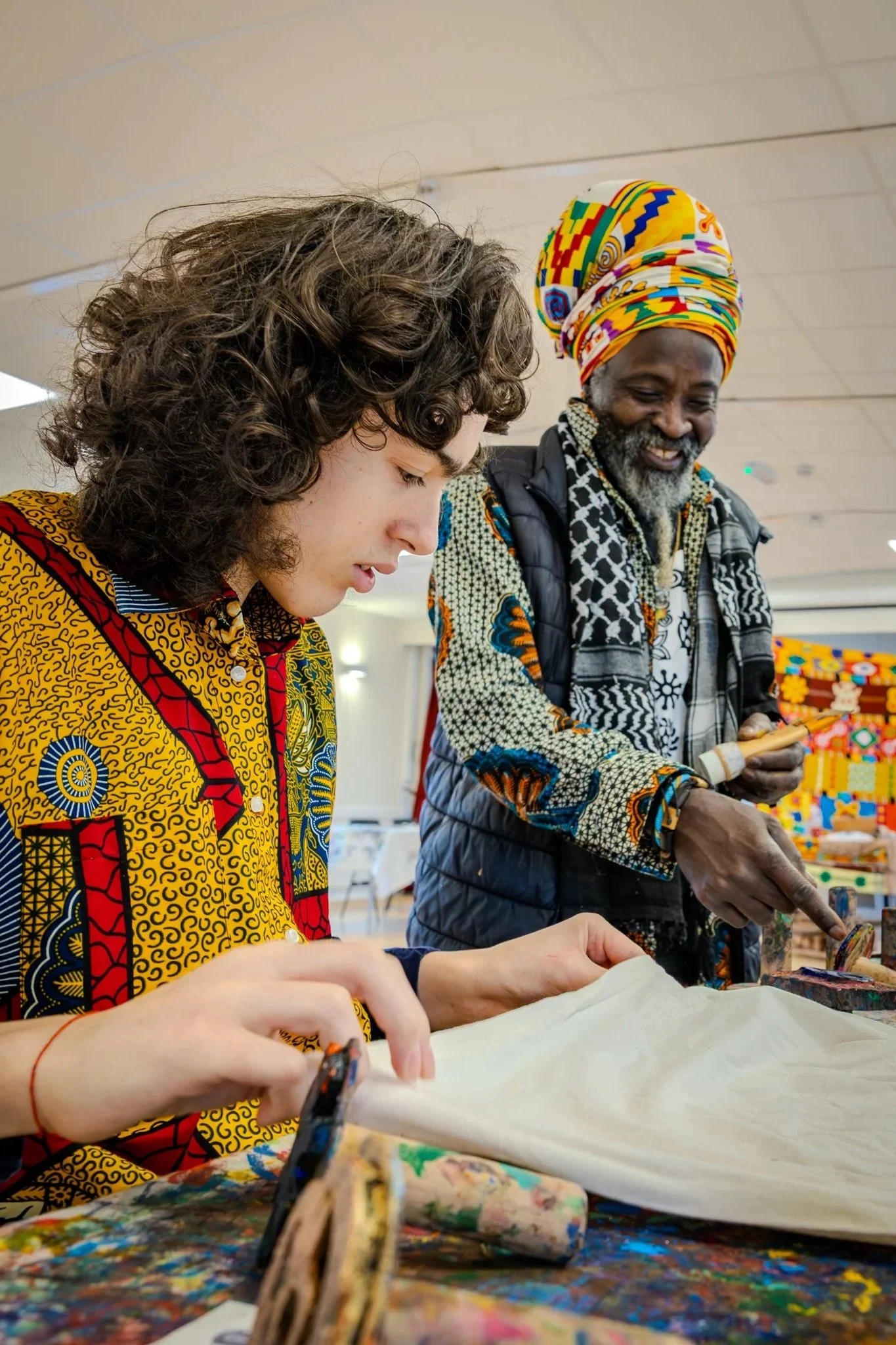
Why Broadleaf is different
Broadleaf is uniquely positioned because we combine:
Deep, long-standing community trust (since 2010)
Highly skilled, values-led facilitators and volunteers
Strong partnerships with organisations, artists, and local services
Established links with research and policy
Experience contributing to national conversations and decision-making
This allows us to:
Bring external opportunities into our community
Act as a bridge between families and statutory services
Ensure that lived experience informs research, policy and practice
The difference we make
Through this approach:
Children and young people feel safe, seen and able to engage
Families feel less isolated and more confident
Strong, lasting peer networks are formed
Access to support becomes clearer and more navigable
Voices that are often unheard are amplified into wider systems
A Connected Community
While our programmes vary, they are all part of one connected community.
Families often engage across multiple areas, building relationships that extend beyond sessions and continue over time.
This is what makes Broadleaf different - not just what we offer, but how it connects.